AI Account Reconciliation Software
End-to-end, AI-enhanced reconciliation management
Close faster and stay audit-ready by automating reconciliation across all GL accounts.
Stay accurate with automated reconciliation
Automated, high-volume matching
DualEntry can process millions of transactions across multiple accounts simultaneously, supporting one-to-one, many-to-one, and many-to-many reconciliations with unparalleled accuracy.
Multi-faceted reconciliation
Handle all reconciliations (bank accounts, credit cards, intercompany balances, and subledgers like revenue recognition) in one place. Automated checks and real-time processing ensure accuracy.
Flux analysis
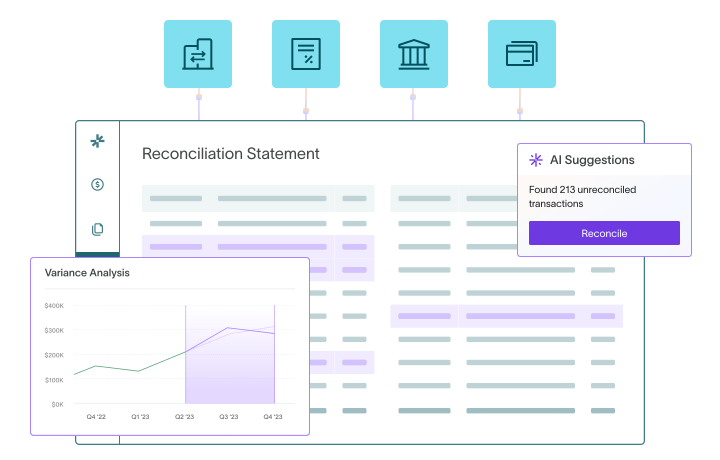
Track and analyze balance changes with automated flux analysis as part of a structured close management process. DualEntry AI automatically identifies fluctuations between periods – whether month-over-month, quarter-over-quarter, or year-over-year.
Flexible templates
Use industry-standard reconciliation templates or customize your own. Group multiple accounts into single schedules to streamline account reconciliation.
Historical period control
Navigate seamlessly between accounting periods with automatic roll-forwards and the ability to reconcile historical transactions across multiple books.
Automated workflows for every reconciliation step
DualEntry AI analyzes your reconciliation patterns to suggest custom matching rules, from basic bank reconciliations to complex intercompany transactions. Each AI-generated rule you set follows strict accountant regulatory requirements, keeping you accurate.
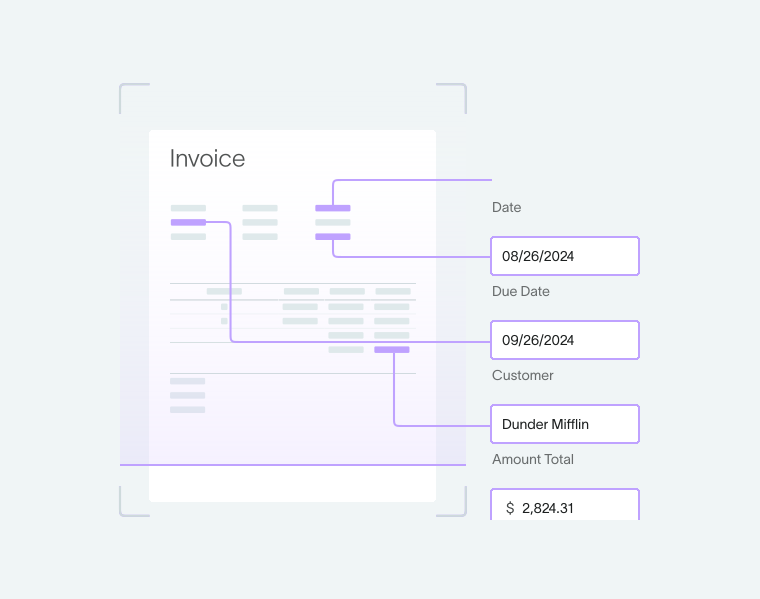
Upload a document in any format and DualEntry’s AI OCR will read it, extract and categorize all relevant transaction data. This info is then mapped to the correct GL accounts. No manual involvement needed.
DualEntry AI continuously monitors transaction matching patterns to flag exceptions and unusual items, so your team can focus on investigating discrepancies and not lose time scanning through routine matches.
Handle amortization and depreciation of any complexity with AI-created schedules. DualEntry generates rollforward schedules, calculates current-period expenses, and pushes journal entries through to DualEntry’s built-in general ledger software—all within the same system.
Connect all your financial accounts to your GL in minutes
Global banking integrations
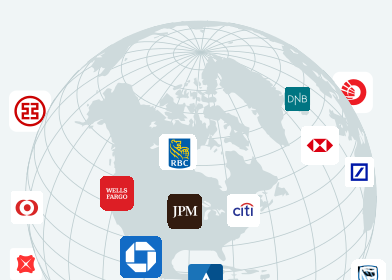
Connect to 13,000+ banks across 240+ countries with automated statement imports. Manage multiple accounts from different banks at once, each with its own import schedule.
AI bank matching
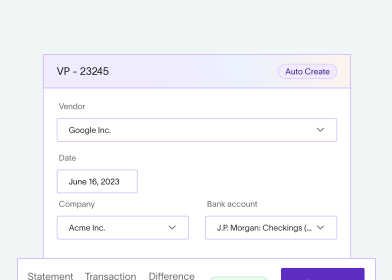
Transactions are automatically paired with accounting entries, even for partial payments or splits. AI-suggested matches speed up the process: simply confirm them, and you’re done.
Exception management
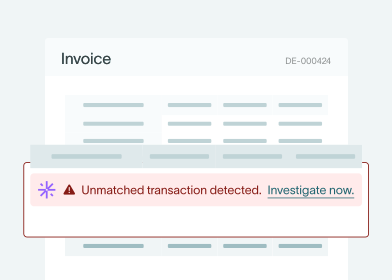
Resolve unmatched transactions faster as DualEntry highlights them for immediate attention. Choose from various resolution options, including write-offs and credit adjustments.
Collaborate and coordinate easily
Effortless planning
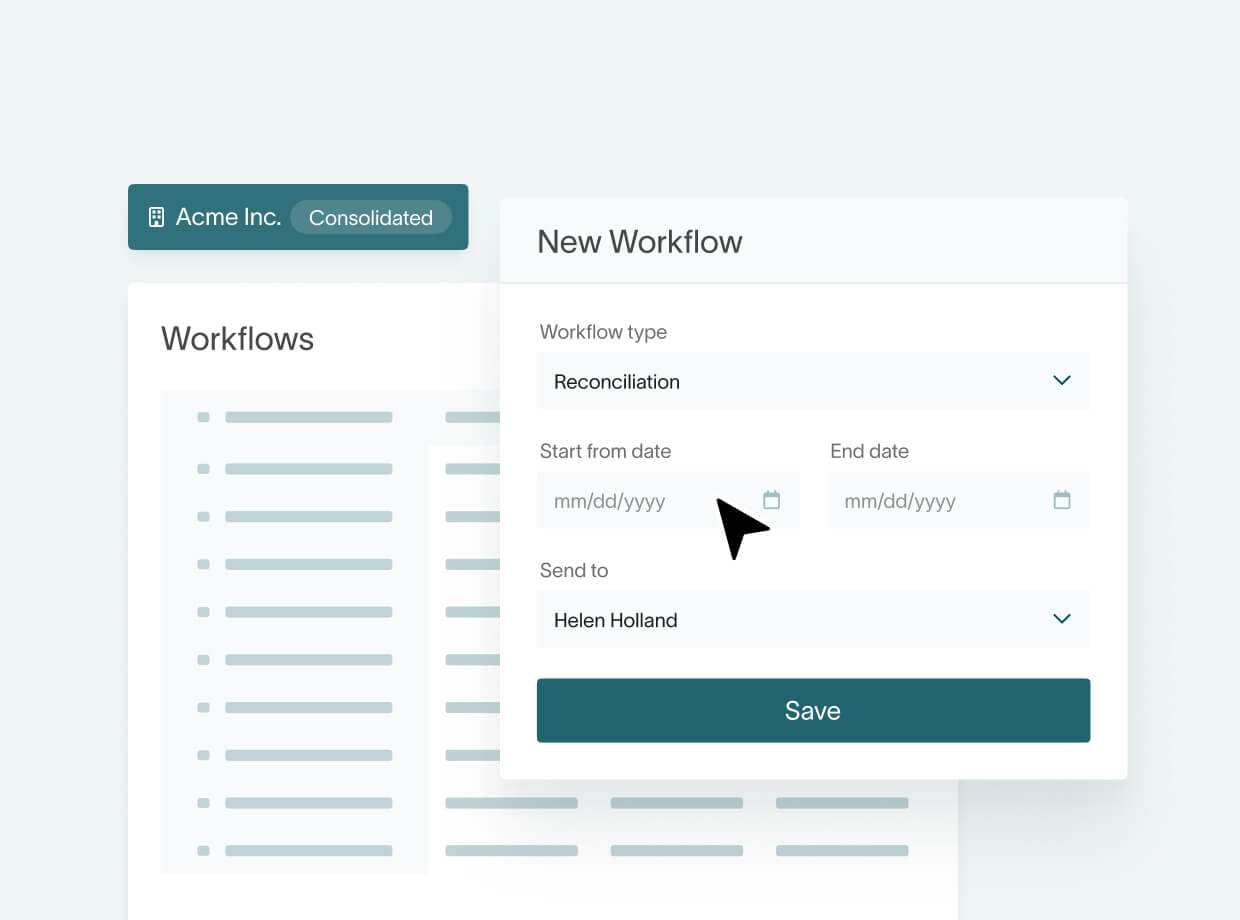
Schedule reconciliation tasks with automated workflows to guide your team. Custom templates manage assignments and approvals, and smart calendars automatically roll forward from past periods.
Real-time visibility
Track every reconciliation step on your dashboard, which highlights to-dos and bottlenecks. To keep things moving, automated alerts notify teams about out-of-balance items and upcoming deadlines.
Improved communication
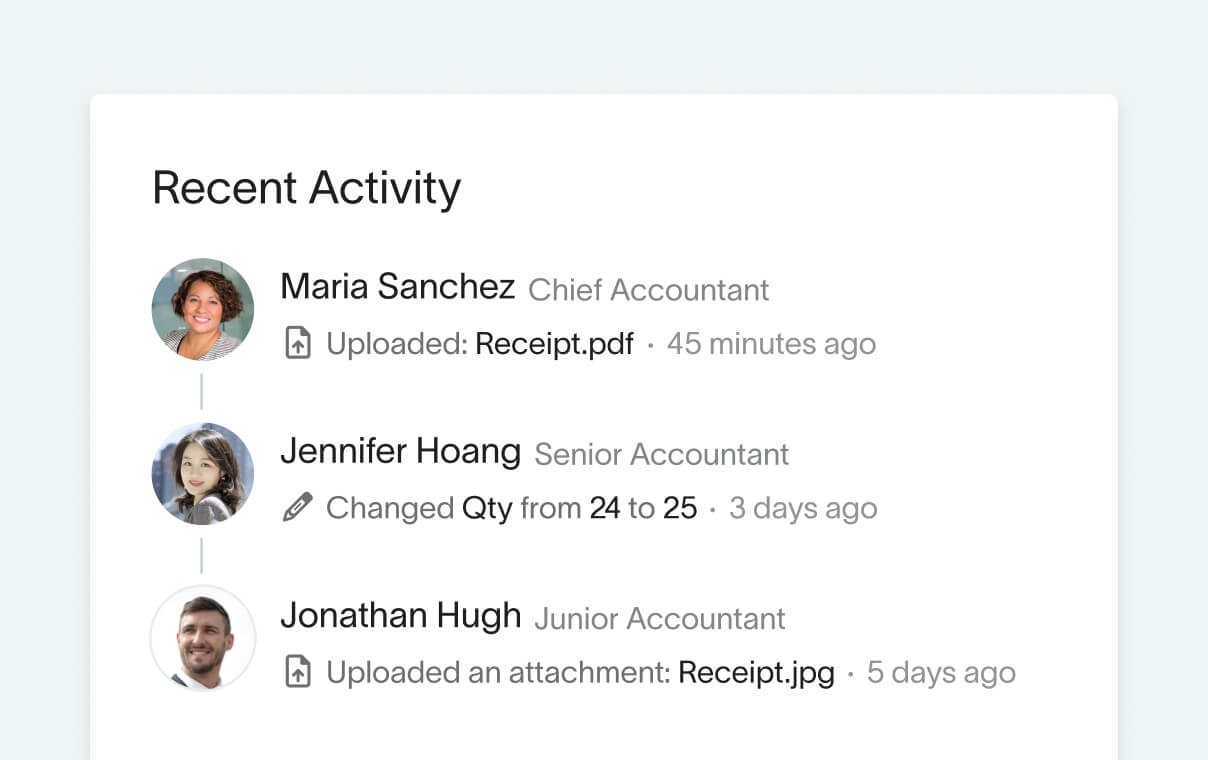
Preparers and reviewers can collaborate smoothly with integrated review notes and secure cloud storage for files. Teams access all financial data in one place, with clear roles and feedback channels for accountability.
Account reconciliation software FAQ
Account reconciliation software helps finance teams confirm that the balances across different accounts – like bank statements, subledgers, or intercompany transactions – match general ledger entries. Learn more about how the general ledger works inside an ERP system.
Yes, AI can reconcile accounts quickly and accurately. DualEntry uses it to match tricky transactions, spot anomalies early, and keep schedules moving without manual busywork. You can check our complete guide on account reconciliation best practices.
How often you reconcile depends on your business size and volume. Teams working with high-volume transaction amounts might even need to reconcile daily, and smaller businesses usually reconcile monthly.
Yes, you can automate reconciliation end to end. Platforms like DualEntry use AI to match transactions (even when details don’t line up perfectly) and flag outliers, learning and increasing in accuracy over time to reduce manual review.
DualEntry automates account reconciliations seamlessly. It matches transactions at scale, applies AI to detect anomalies, rolls balances forward automatically, and reconciles even your historical data. With the help of built-in templates, rule creation, task tracking, and 13,000+ bank integrations, your team will spend less time on manual checking and closing, and more time on strategic work.
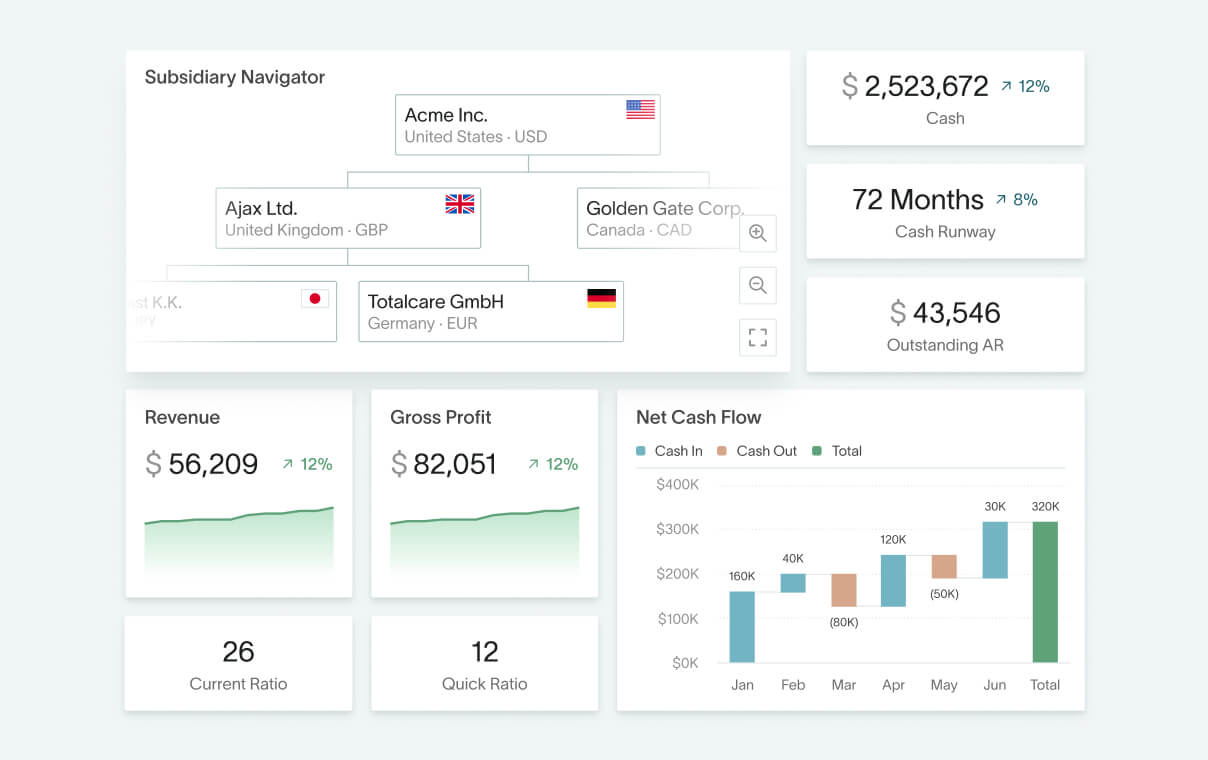
Yes, DualEntry is an AI reconciliation software built for multi-entity and intercompany reconciliation. It automatically matches transactions across entities, flags imbalances, and rolls up consolidated views in real time. No manual mapping; no version control issues.
When a transaction doesn’t match, DualEntry’s AI flags it and routes it into an exception queue. There you can review it, check all the details, and decide what needs to be done before it’s pushed through.
See the full power of DualEntry in 30 minutes
Recent articles

Foreign Exchange Risk Management: Types & Strategies
Discover foreign exchange risk management: key types, challenges, and strategies. Learn how FX hedging and automation strengthen treasury operations.
AI in Accounting: The Complete 2026 Guide
A complete 2026 guide to AI in accounting: key use cases, benefits, risks, and how finance teams use AI for reporting, audit, tax, and planning.

AI Benefits in Accounting
Discover the key benefits of AI in accounting from faster closes and lower costs to better accuracy, fraud detection, and forecasting. See how modern finance teams use AI in 2025.